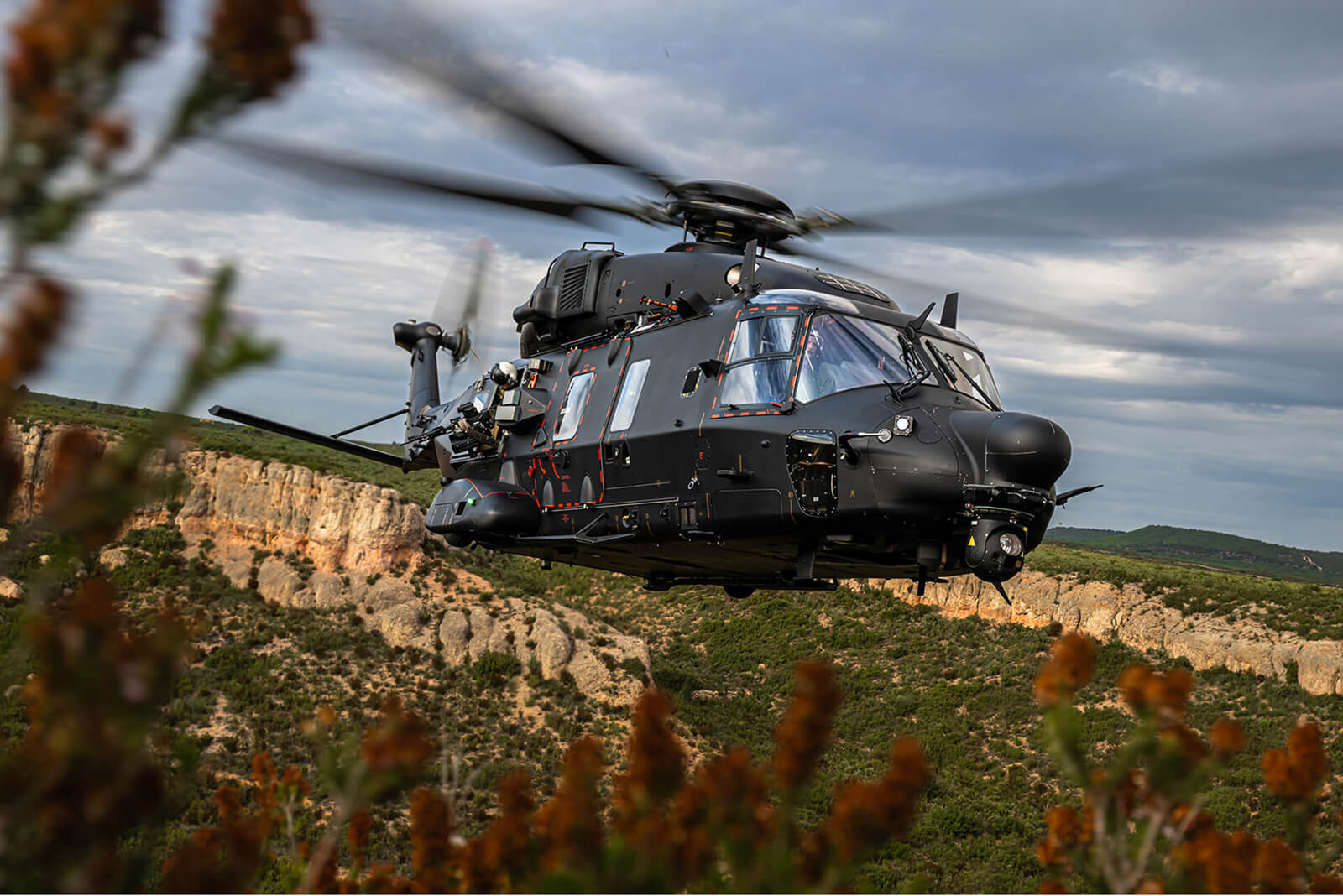
With mountainous terrain, unpredictable weather and a vast area of operation stretching across the Southwest Pacific, the Royal New Zealand Air Force (RNZAF) fleet of eight NH90 TTH helicopters is tested to the limit. Squadron Leader Lachie Johnston, No. 3 Squadron Flight Commander, reflects on why the helicopter is a vital tool in meeting the most demanding missions.
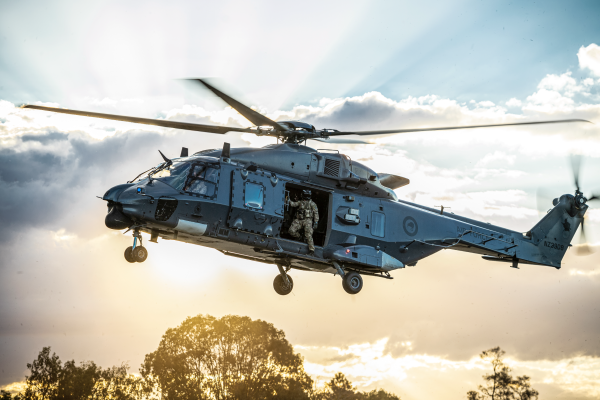
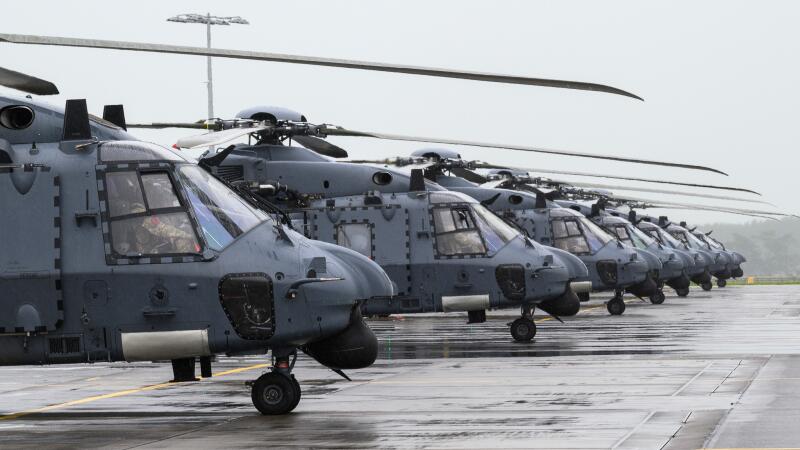
Since entering in service in 2011, the eight-strong NH90 TTH fleet has been pivotal to the operations of the RNZAF. The platform’s main role is to provide tactical air mobility for New Zealand’s Defence Force – a role that includes moving troops and equipment, performing casualty evacuation and supporting special operations. The multi-mission capabilities of the NH90 are also put to good use in support of diverse operations such as search and rescue (SAR), law enforcement, disaster relief and counter-terrorism response.
New flight hour milestone
In August 2026, one of the RNZAF NH90 fleet set a new record when it surpassed 3,000 flight hours – becoming the first NH90 worldwide to pass the 3,000-hours mark. The aircraft, designated TNZA002, wrote its own small piece of aviation history and in doing so demonstrated the high operational intensity that is a hallmark of the RNZAF NH90 fleet.
New Zealand’s No.3 Squadron has clocked more than 20,000 flight hours with its eight aircraft, a remarkable figure given the relatively small fleet size. Since the NH90 TTH entered service, it has been central to humanitarian relief response missions, including the Kaikōura earthquake and Tropical Cyclone Gabrielle. The NH90 has also proven to be an invaluable SAR asset when conditions don’t allow local rescue helicopters into the search area.
Meeting the SAR challenge
Sqn Ldr Lachie Johnston is responsible for the air crews who fly the NH90 in No. 3 Squadron. He comments: “For us in New Zealand, more often than not, the most challenging missions that we have revolve around the search and rescue role that we fill. We have a number of mountainous terrains in New Zealand, which are subject to a lot of high winds and poor weather.
“We’re called out after the civilian helicopters have gone and given it their best effort, where we go and explore the, I guess, the full capability of the NH90, which is using a large crew, we’re allowed to go and operate in some pretty poor conditions, particularly high winds where the NH90 performs incredibly well when compared to other helicopter types.”
Feat of endurance
Sqn Ldr Johnston also highlights an important capability that the platform provides to the RNZAF: “Another facet of the NH90, which makes it I think, quite unique, and capable is its long-range endurance. So, we’ve been able to employ that in its long range ferry to other nations or back from other countries, which allows us to be adaptable and readily deployed around the Southwest Pacific when we’re otherwise unable to deploy by way of ship or other air transport.”
This long-range capability was clearly demonstrated in 2025 when two RNZAF NH90s completed a record-breaking journey from Australia to New Zealand via Norfolk Island. Over the course of two days, the aircraft covered a distance of 1,534nm (2,840km) over water. The longest leg of the journey, between Norfolk and RNZAF Base Auckland was 573nm (1,060km) and took around four and a half hours.
Pilot’s perspective
What is the NH90 like to fly from the point of view of a pilot? Sqn Ldr Johnston says: “As a pilot, the NH90 is brilliant to fly, particularly in the IFR environment, over water, and as I mentioned before, in the mountainous terrain where it’s got brilliant amounts of power and capability.
“The systems as a whole support us in our execution of the mission by enhancing our situational awareness, whether that’s by way of the moving map or the use of the weather radar, particularly over water or in the instrument environment.”
He also points to the ongoing evolution of the platform, which for the RNZAF includes a project to update the secure comms on the NH90, enabling further integration with partner nations in the Southwest Pacific and beyond.