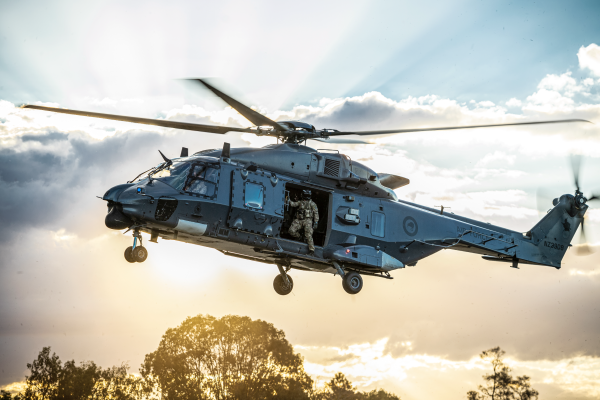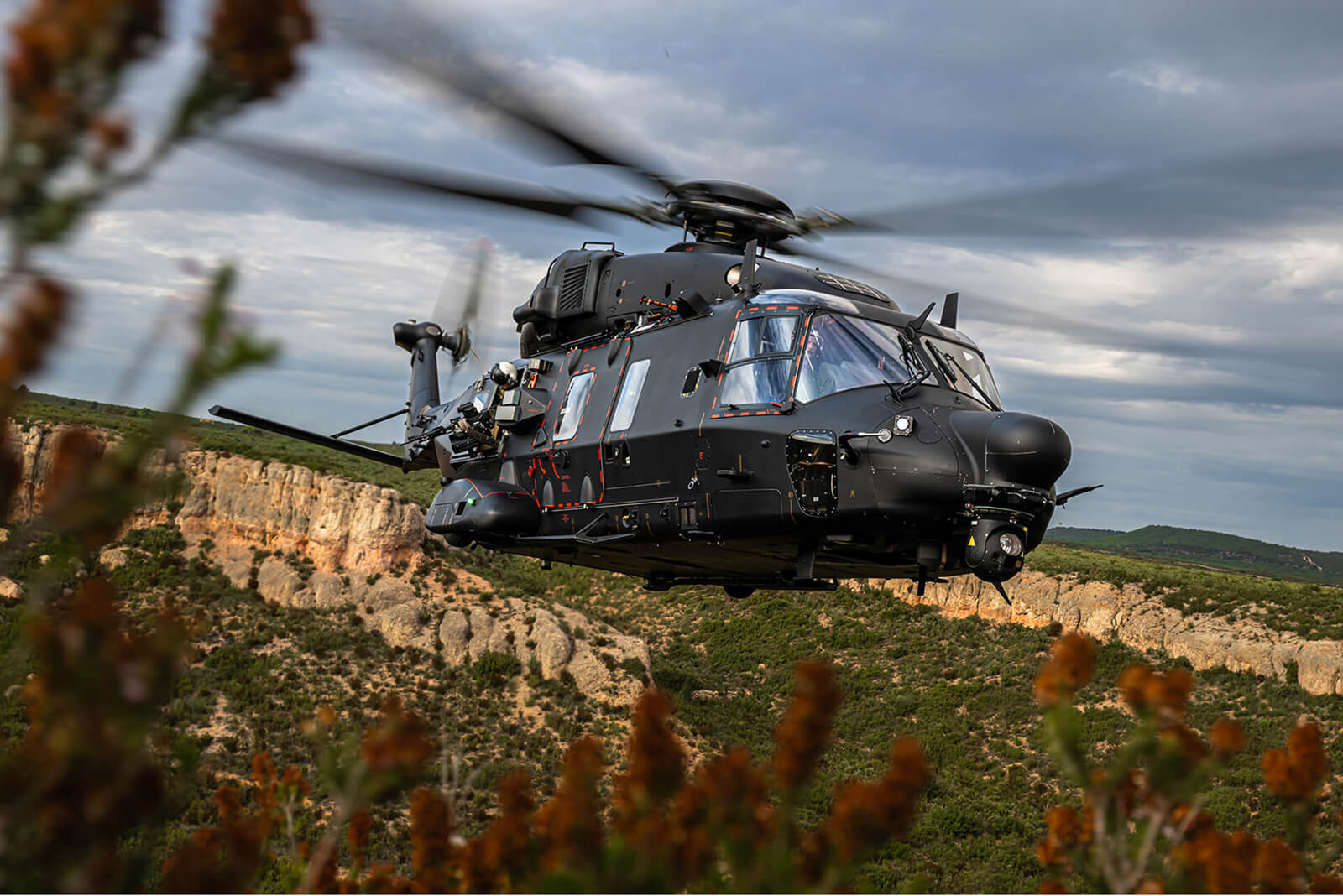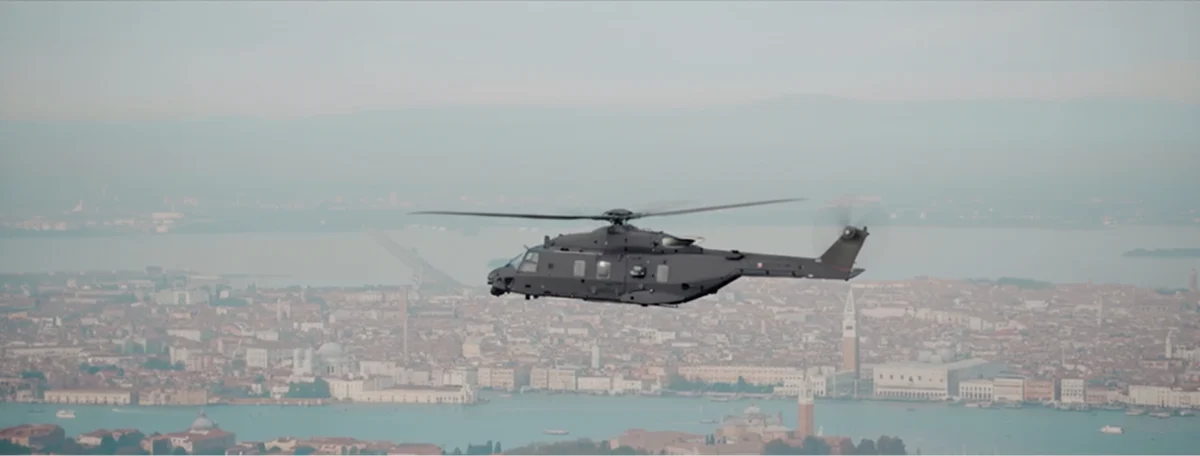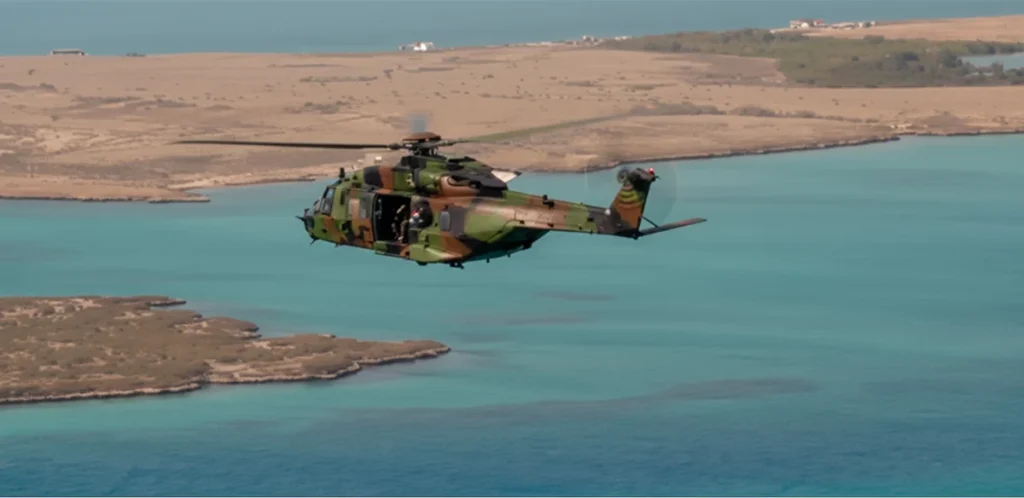
The arrival of the NH90 Caïman in Djibouti has underlined the helicopter’s versatility and ability to operate successfully in one of the most demanding environments anywhere in the world. The deployment of the TTH (Tactical Transport Helicopter) by the French Army during summer 2025, marks an important milestone for helicopter operations in the country and the start of a new operational phase for the unit deployed in the region.
To get a better sense of the capabilities that the NH90 Caïman brings to the theatre, we spoke to Local Technical Director Commandant Ali, who oversees the aircraft’s technical implementation and operational integration.
The Caïman’s missions in Djibouti
Commandant Ali describes how the NH90 Caïman quickly proved itself as a highly versatile aircraft in an environment where climate and geography put both aircraft and crews to the test.
He comments: “It covers a very broad range of missions: tactical transport of commandos or heavy units such as the 120 mm mortar group, troop support thanks to its payload and armament capabilities (M3M machine gun), medical evacuations, reconnaissance missions, as well as support and protection operations.
“Djibouti is not an easy ‘playground’, with extreme heat, omnipresent dust, the saline atmosphere, and significant distances. In these conditions, the Caïman demonstrates the full range and robustness of its capabilities, where the limitations of older aircraft tend to appear more quickly.”
A new era of capability
The Caïman provides a generational leap in helicopter capability. Compared with previous platforms, it offers greater engine power, an extended operational range and higher payload capacity.
However, the helicopter’s most significant advantage lies in its modern avionics suite, which fundamentally transforms how crews operate and manage missions.
As Commandant Ali explains: “We move from a helicopter that simply gets the job done to one that truly opens new operational possibilities.”
The advanced systems on board give crews improved flight management, greater situational awareness, enhanced safety and higher mission efficiency. These advantages become particularly valuable in operational theatres where flexibility and rapid decision-making are essential.
Why the Caïman is perfectly suited to Djibouti
Djibouti is widely regarded as a natural testing ground for military aviation, with high ambient temperatures, dust exposure and corrosive salty air among the challenges. The NH90 Caïman has been designed to operate effectively under exactly these types of conditions.
It maintains strong performance even in extreme heat, suffers minimal loss of power when fully loaded, and provides extended endurance for long-range missions which can be required in-country. The aircraft also offers rapid mission reconfiguration, allowing crews to quickly transition between transport, reconnaissance, or support roles.
Personal perspective
For crews transitioning to the Caïman, the shift in capability is readily apparent. Commandant Ali says: “What stands out most when flying the Caïman is the feeling of reserve power. Even heavily loaded, it remains stable, powerful, and well-balanced. It is a helicopter that inspires confidence and immediately reassures the crew.”
Keeping the Caïman flying
From a maintenance standpoint, the Caïman introduces major improvements in reliability and maintainability. Its modern design significantly reduces the need for heavy mechanical adjustments. Technical flights following maintenance interventions are also far less frequent, thanks to advanced onboard diagnostics that allow technicians to identify issues earlier and more precisely.
Key maintenance advantages include the highly stable rotor and flight control systems, requiring fewer adjustments and continuous system monitoring, enabling targeted maintenance only when necessary. The use of modular components enables rapid replacement and reduced aircraft downtime, while composite airframe structures greatly limit corrosion in saline environments. Maintenance operations for the Caïman have therefore shifted toward a preventative approach rather than corrective intervention.
Additional improvements include fully digital technical documentation, advanced fault identification systems, post-mission flight data analysis for precise maintenance feedback, and improved traceability of technical interventions.
Despite the logistical constraints associated with remote deployments, industrial support remains effective, augmented by remote assistance. Supply chains and spare part delivery times continue to improve. The result is a helicopter that returns to operational service more quickly, significantly enhancing overall fleet availability.
A lasting impression
Beyond its operational capabilities, the Caïman also leaves a strong visual impression. Its massive, imposing silhouette conveys both power and durability, embodying the modern evolution of military helicopter capability. It combines advanced technology, strong operational capabilities, and a design built for the demands of modern military operations in the toughest operational theatres.
Link to the video provided by French Army: